
Emergency tarping and dry-in
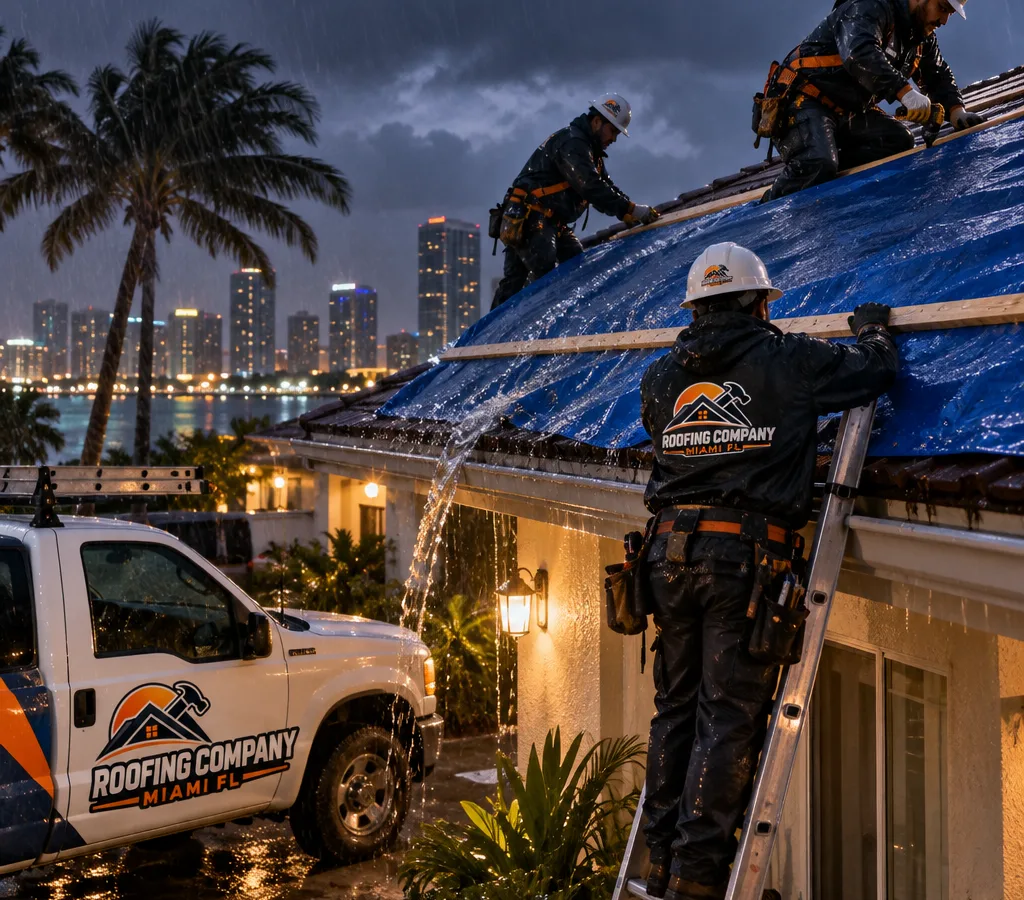
We install heavy-duty tarps and secure them properly—not just weigh them down—to shed water and protect the opening. We also seal exposed fasteners and vulnerable seams as conditions allow.
Serving Miami, Florida & surrounding areas
Mon–Fri 8am–6pm · Sat 9am–2pm
Emergency roofing in Miami, Florida
When your roof starts leaking or storm damage opens the deck, fast action matters. Our crew dispatches for urgent tarping and targeted repairs to protect interiors, prevent spread, and stabilize the roof until permanent work is complete.
Protect the structure first
If you searched emergency roofing Miami, you are probably dealing with a leak right now, missing shingles, a puncture from debris, or a section of roof that lifted during high winds. The goal in an emergency is simple: stop water entry, reduce further damage, and make the roof safe until a permanent repair can be completed.
In Miami, emergency calls often come after intense rain bands and wind events that push water under aging shingles, crack tile at fasteners, or loosen metal panels at edges and penetrations. Even a small opening can soak insulation, stain ceilings, and spread into walls within hours.
Roofing Company Miami FL handles emergency dispatch across Miami and nearby areas. Our team focuses on the work that protects the structure first: rapid leak isolation, temporary dry-in through tarping and sealing, and then the right repair plan based on what the inspection shows. If you are comparing contractors, verify that the scope includes photos and a written plan for temporary and permanent repairs.
Immediate protection and clear next steps
We install heavy-duty tarps and secure them properly—not just weigh them down—to shed water and protect the opening. We also seal exposed fasteners and vulnerable seams as conditions allow.
Roof leaks rarely drip straight down from the entry point. We trace water paths around valleys, flashing, penetrations, and underlayment failures so the fix targets the real source.
When wind lifts edges or debris punctures the roof, we stabilize loose materials, remove hazards, and secure the area to prevent the opening from growing with the next gust.
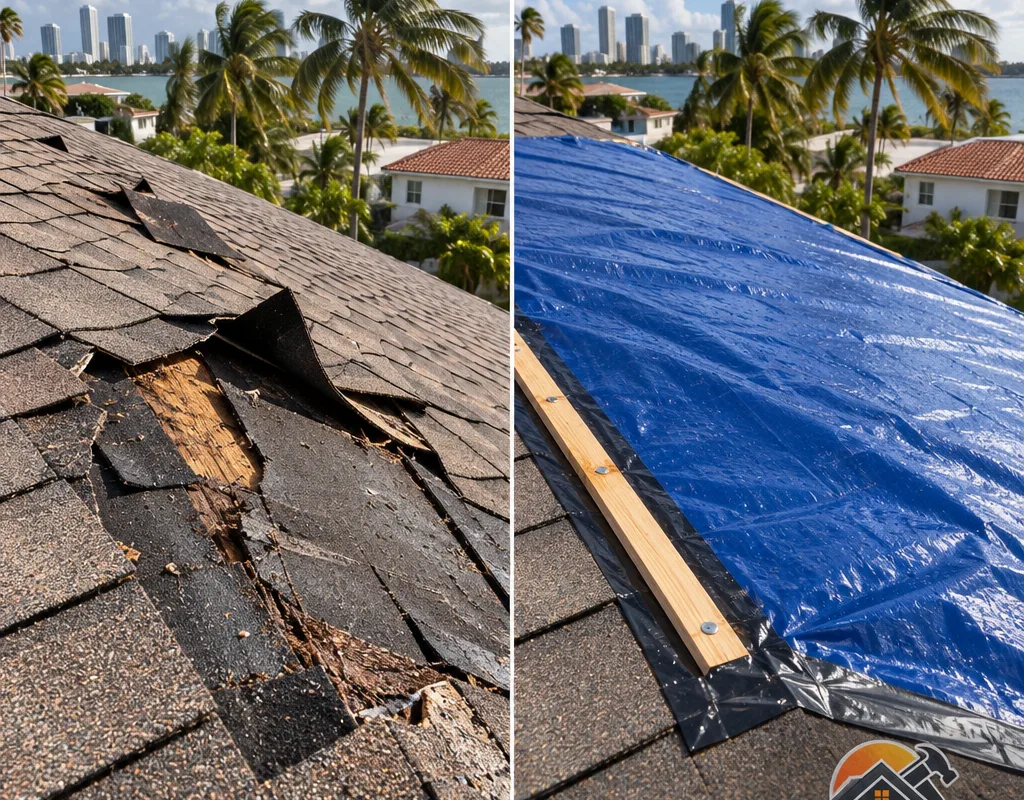
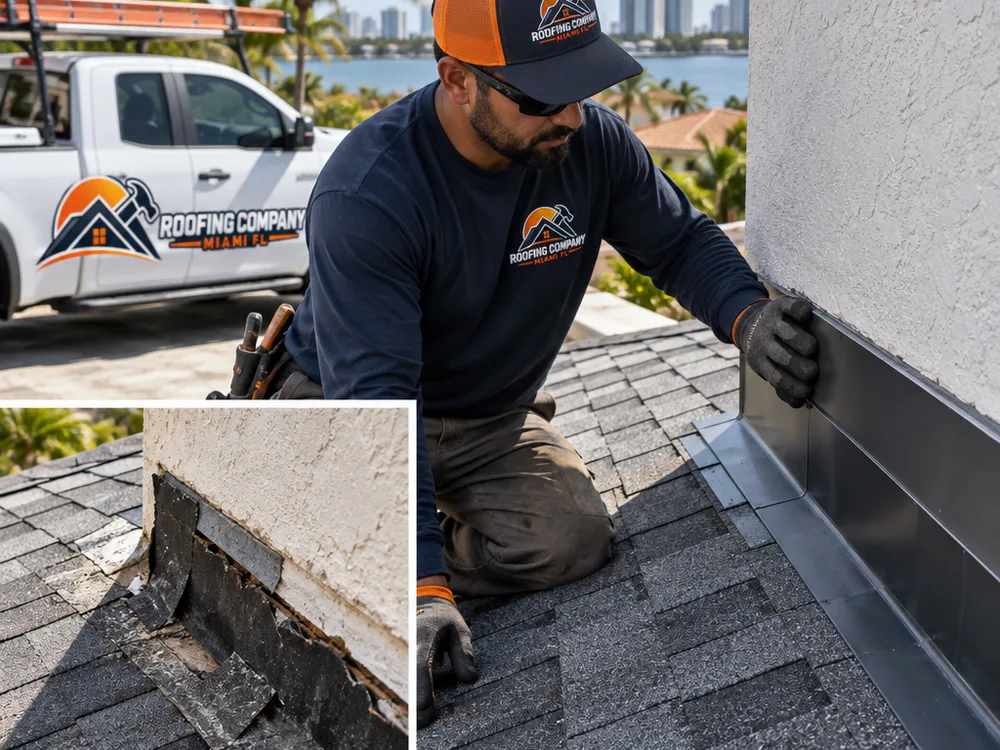
You get clear photos of the damaged areas and a straightforward scope for next steps, including what is temporary and what needs a permanent repair.
We assess ladder placement, wet-surface risk, and electrical hazards before stepping onto the roof. If conditions are unsafe, we dry-in what we can and return as soon as it is safe.
Miami emergency leak diagnostics
Emergency roof calls in Miami tend to cluster around a few failure points. Knowing them helps you describe what you are seeing and helps us arrive prepared.
Wind-lifted shingles or ridge caps: Often shows up as sudden leaks after gusty weather, especially near ridges and roof edges.
Tile cracks or slipped tiles: Tile roofs can leak when a tile breaks or shifts, exposing underlayment. The leak may appear far from the break.
Flashing failures around penetrations: Plumbing vent boots, pipe collars, and wall flashing are frequent entry points. Sealant alone is rarely a permanent fix if the metal is loose or the underlayment is compromised.
Valley and transition leaks: Valleys carry heavy water flow. Small separations, lifted metal, or underlayment wear can become urgent quickly during long rain.
Punctures from debris: A branch impact can break sheathing or dent metal panels. Even if the outside looks minor, the underlayment and deck may be damaged.
In areas with dense, older housing stock like Coral Gables, roof details can be complex around parapets, additions, and mixed rooflines. In Brickell and Downtown Miami, access and staging can take extra planning around tight setbacks and multi-story structures. We factor those realities into the response plan so the dry-in happens quickly and safely.
From urgent call to repair plan
Step 1 of 5
We ask what you are seeing—active dripping, ceiling staining, missing materials, or tree impact—and whether there are interior safety concerns. This helps us prioritize and arrive with the right materials for a dry-in.
Step 2 of 5
We document the roof condition, identify likely entry points, and check common pathways like valleys, flashing, penetrations, and transitions. When needed, we check attic conditions to confirm water paths.
Step 3 of 5
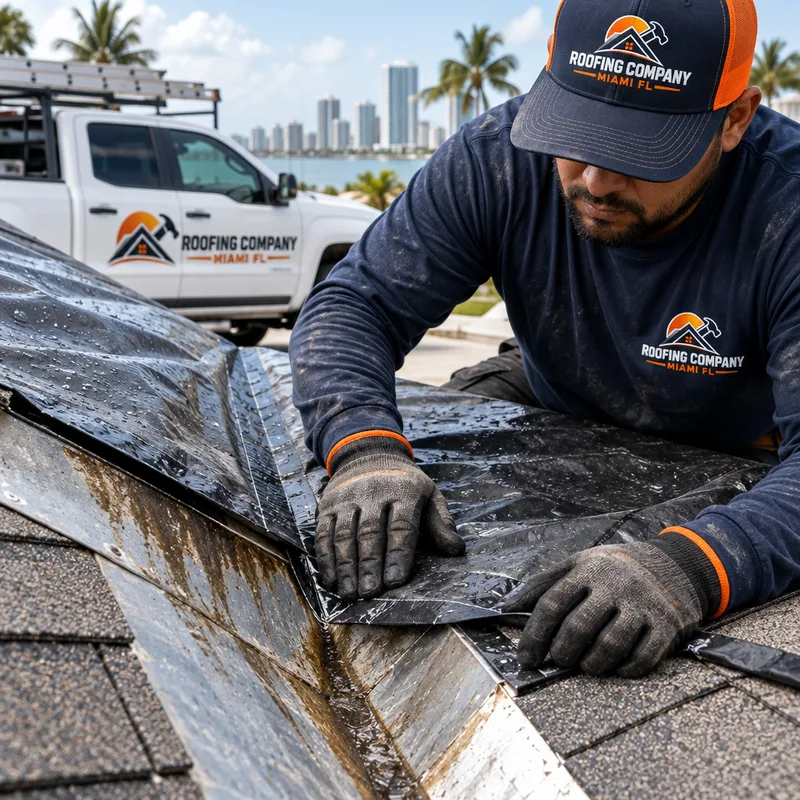
We install a secure tarp or temporary membrane and seal vulnerable edges to shed water. The purpose is to protect the home and stop the damage from spreading.
Step 4 of 5
We secure loose materials, remove immediate hazards, and address conditions that could worsen in the next storm, such as lifted edges or exposed underlayment.
Step 5 of 5
You receive photos and a clear plan for the permanent fix, including what needs replacement—flashing, shingles, tile sections, or metal panels—and what can be re-secured.
Planning the urgent work
Emergency roofing in Miami typically ranges from about $350 to $1,500+ for a service visit that includes leak evaluation and basic temporary protection, while larger tarp installs or more complex access can run $1,500 to $4,000+. Pricing varies with roof height and pitch, how much area must be dried-in, the roof system—tile, shingle, metal, or flat—and whether decking or flashing is damaged. Exact cost is confirmed after an on-site inspection and a written scope.
CALL NOW (786) 981-8808Protection you can see
Answers during an active leak
Response time depends on weather conditions and current storm volume, but the priority is same-day dispatch whenever it is safe to get on the roof. During active lightning or dangerous winds, we may start with interior guidance to limit damage and return as soon as conditions allow safe roof access.
We can often install emergency tarps during light to moderate rain, but we will not work on a roof when conditions create a serious fall risk, especially during lightning. When the roof surface is too dangerous, we focus on safe interim steps and schedule the tarp installation at the earliest safe window.
No. Tarping is a temporary dry-in meant to stop water entry and prevent additional damage. A permanent repair usually involves replacing damaged surface materials, correcting flashing details, and restoring underlayment integrity where it failed.
Move valuables away from the leak, place a bucket to catch dripping, and use towels to protect floors. If a ceiling is bulging with trapped water, keep people out from underneath and avoid puncturing it unless a professional advises it, since wet drywall can collapse and there may be electrical risk.
Yes, we document visible roof damage and the emergency measures installed with clear photos and a written scope. This helps you understand what is temporary, what needs permanent repair, and what areas should be monitored after the next rain.
Yes, emergency stabilization and leak control can be performed on common roof types, but the methods differ. Tile often needs careful removal and reset around the break, metal repairs focus on seams and fasteners, shingles may need replacement and re-sealing, and flat roofs often require temporary membrane patches or edge securement.
Protect your home now
If your roof is actively leaking or storm damage exposed the roof system, send the details and photos you have. We will prioritize a safe, fast dry-in and give you a clear plan for the permanent repair.