
Written scope before work starts
We document the roof area, tear-off plan, insulation approach, flashing details, and how drains or scuppers are handled so the job does not drift mid-project.
Serving Miami, Florida & surrounding areas
Mon–Fri 8am–6pm · Sat 9am–2pm
Flat roof replacement in Miami, Florida
Replace a failing flat roof with a system built for South Florida rain, sun, and wind. Get a clear scope, material options, and a clean jobsite from start to finish.
Know when repairs have run their course
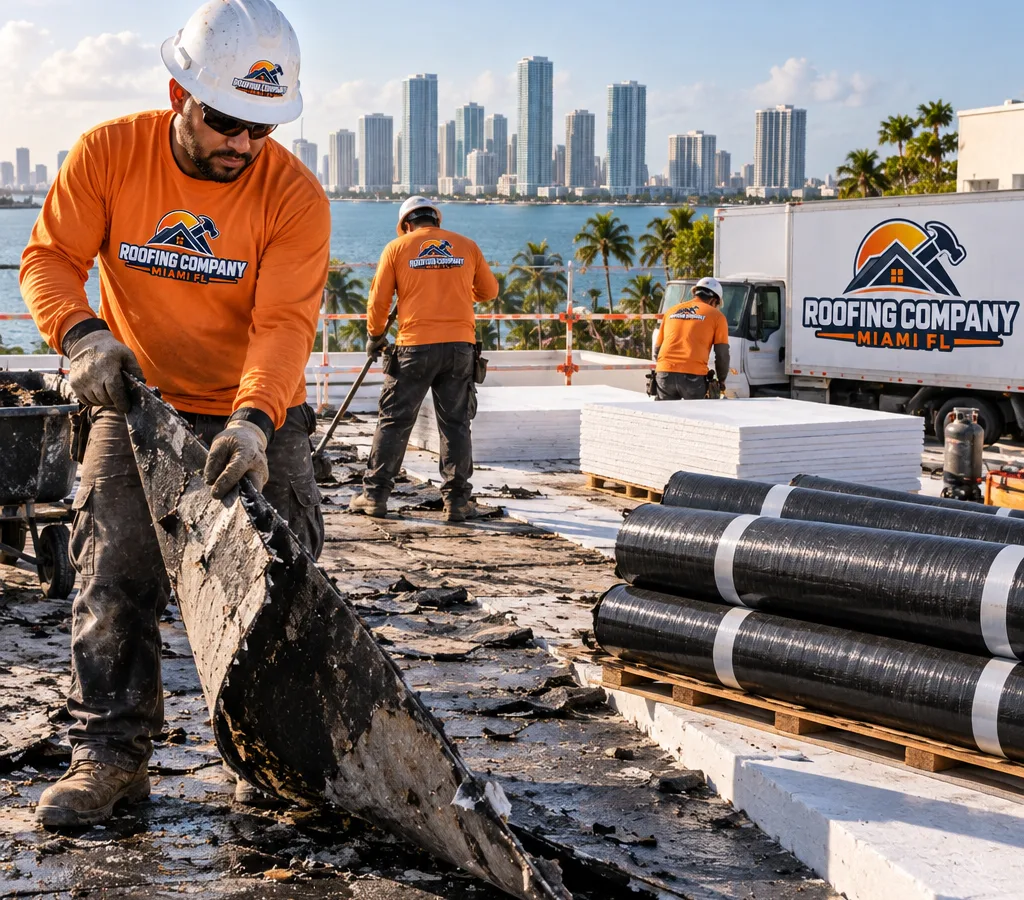
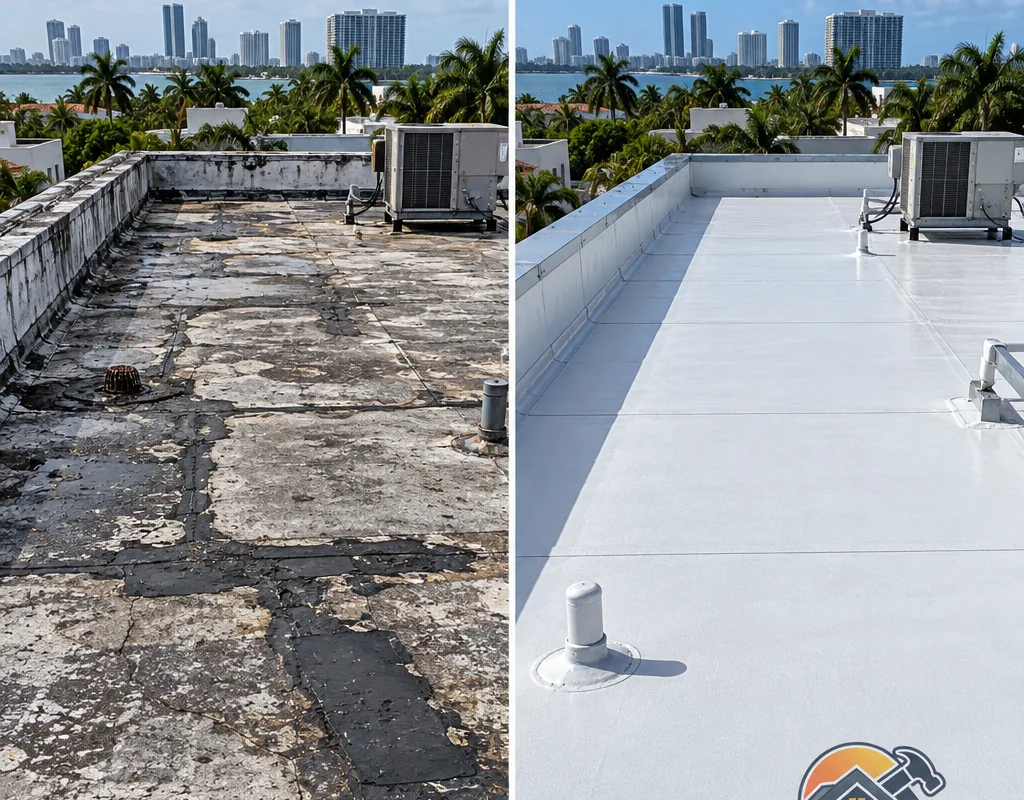
If you are searching for flat roof replacement Miami, you are usually past the point where another small repair makes sense. Flat roofs can be repaired many times, but repeated leaks often mean water is getting under the membrane, insulation is saturated, or seams and flashing have reached the end of their life.
Replacement is typically the right call when you see one or more of these:
In Miami, heavy rain events, constant UV exposure, and hurricane-season wind pressure can turn small membrane problems into interior damage quickly. A planned replacement lets you upgrade drainage details, improve roof-to-wall transitions, and install a system that addresses the places low-slope roofs commonly fail: seams, penetrations, and edges.
Choose the complete roof assembly
A good replacement is more than swapping a top layer. The roof is a system: membrane, insulation, attachment method, flashing, and drainage. We help you choose the right assembly for your building and budget, then write the scope so you know what is included.
Common flat roof options include:
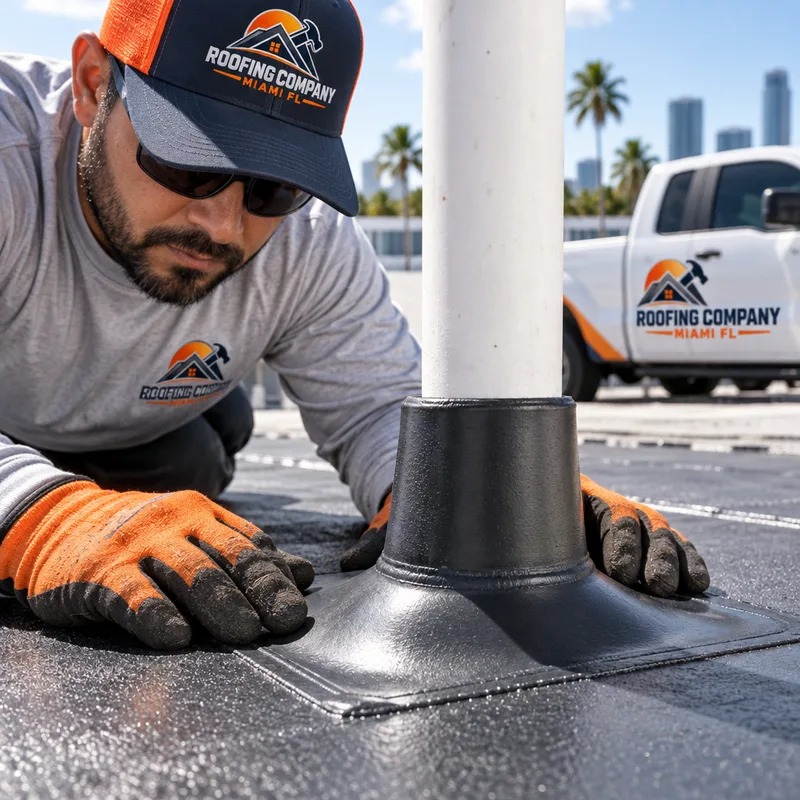
We also address the parts that often decide whether a flat roof lasts: new perimeter edge metal, parapet cap and wall flashing, curb flashing at HVAC equipment and vents, and any needed cricketing or drain improvements. A roofing contractor should be able to explain these details in plain language and put them in writing.
A replacement scope built around the details
We document the roof area, tear-off plan, insulation approach, flashing details, and how drains or scuppers are handled so the job does not drift mid-project.
Some roofs need a full tear-off to address wet insulation or deck issues; others can be recovered when the substrate is suitable. We explain the tradeoffs and code-driven limits that apply.
On flat roofs, water and wind find weak transitions. We focus on perimeter terminations, penetrations, and drainage points where most leaks begin.
Low-slope roofs often sit over living spaces, storefronts, or offices. We plan staging, debris removal, and daily cleanup so the property stays usable.
Miami weather changes fast. We schedule around forecasts, explain what happens if rain interrupts work, and keep you updated on progress.
From assessment to final walkthrough
Step 1 of 5
We walk the roof, check seams, flashing, and transitions, and look for soft areas and interior leak patterns. We also review HVAC stands, vents, and skylight curbs because penetrations drive many replacement details.
Step 2 of 5
You get options for membrane type, insulation thickness strategy, attachment method, and flashing approach. The goal is a scope that matches the building and its exposure.
Step 3 of 5
We protect access and staging areas, complete tear-off if needed, remove wet materials, and confirm the substrate is sound. If a recover is approved, we prepare the existing surface for the new system.
Step 4 of 5
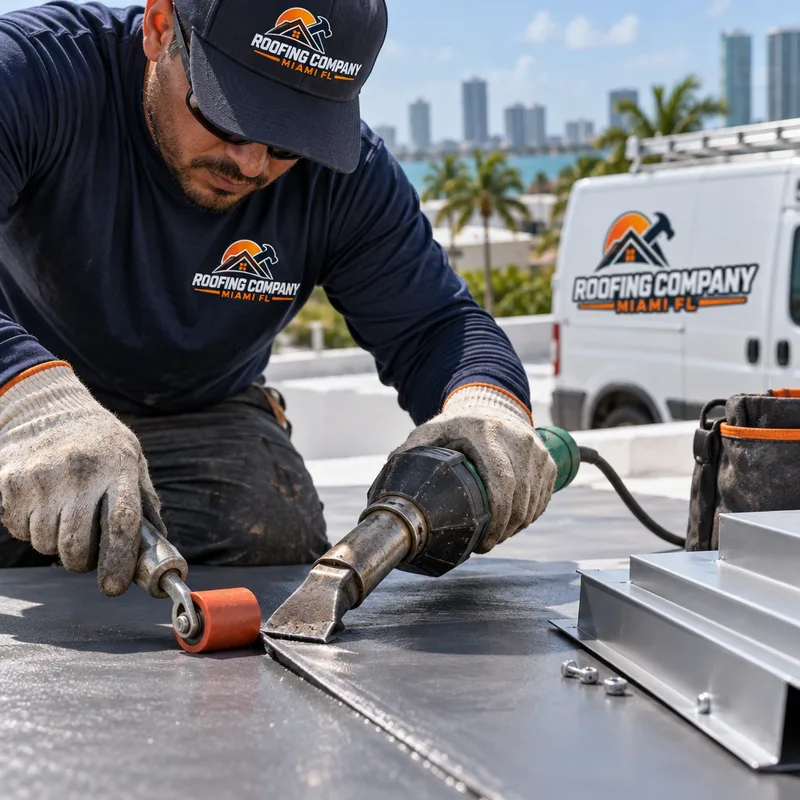
We install insulation and membrane according to the selected assembly, then build out terminations, corners, edge metal, and penetration flashing. These details matter as much as the field membrane.
Step 5 of 5
We clear debris, confirm water-shedding and termination points, and review the finished work with you. We also note roof-access practices that can help prevent punctures from future trades.
Plan your replacement budget
Most flat roof replacement projects in Miami typically run about $10 to $22 per square foot, with small residential roofs often landing in the $8,000 to $20,000 range and larger commercial areas scaling up based on access and complexity. Material choice—TPO, PVC, or modified bitumen—tear-off versus recover, insulation thickness, flashing extent, and the number of penetrations are the biggest price drivers. The exact cost is confirmed after an on-roof inspection and a written scope that spells out the system and details.
CALL NOW (786) 981-8808Built around vulnerable transitions
Answers before replacement begins
Many flat roof replacements take 2 to 5 working days, but the timeline depends on roof size, how much tear-off is required, and how many penetrations and parapet walls need detailed flashing. In Miami, weather windows matter, so we plan sequencing to keep the building dried-in at the end of each workday whenever possible.
A recover can be possible when the existing roof is dry, stable, and compatible with the new system, but a full tear-off is often needed when insulation is wet, the roof is uneven, or the existing assembly is failing at multiple layers. We confirm suitability during the roof inspection and base the recommendation on conditions and the details your roof needs at edges and penetrations.
There is no single best material for every Miami flat roof; the best choice depends on the building, rooftop traffic, and how many details must be flashed. TPO and PVC use heat-welded seams, which is a strong advantage on low-slope roofs, while modified bitumen is a proven option when installed with correct laps and flashing. We walk you through the pros and cons for your specific roof rather than pushing one system.
If insulation is wet or deteriorated, it should be removed and replaced because trapped moisture can keep causing problems under a new membrane. Even when insulation is dry, many replacements include new insulation to improve slope transitions and create a clean, consistent surface for the new roof system.
We handle flat roof replacement projects across Miami, including work in Coral Gables where many properties have low-slope sections with parapet walls, Brickell where roof access and staging must be planned carefully, Wynwood where commercial rooftops often have multiple penetrations, and Coconut Grove where wind-driven rain makes termination details especially important.
A solid estimate should spell out the membrane type and thickness, insulation plan, tear-off or recover approach, flashing and edge metal scope, how drains or scuppers are handled, and cleanup and disposal. If any wood or deck repairs are possible, it should also state how those are documented and priced if discovered after tear-off.
Start with an on-roof inspection
Tell us what you are seeing—leaks, ponding, or soft spots—and when you need the work done. We will inspect the roof, explain the best replacement system for the building, and provide a written scope with clear next steps.