
Photo documentation
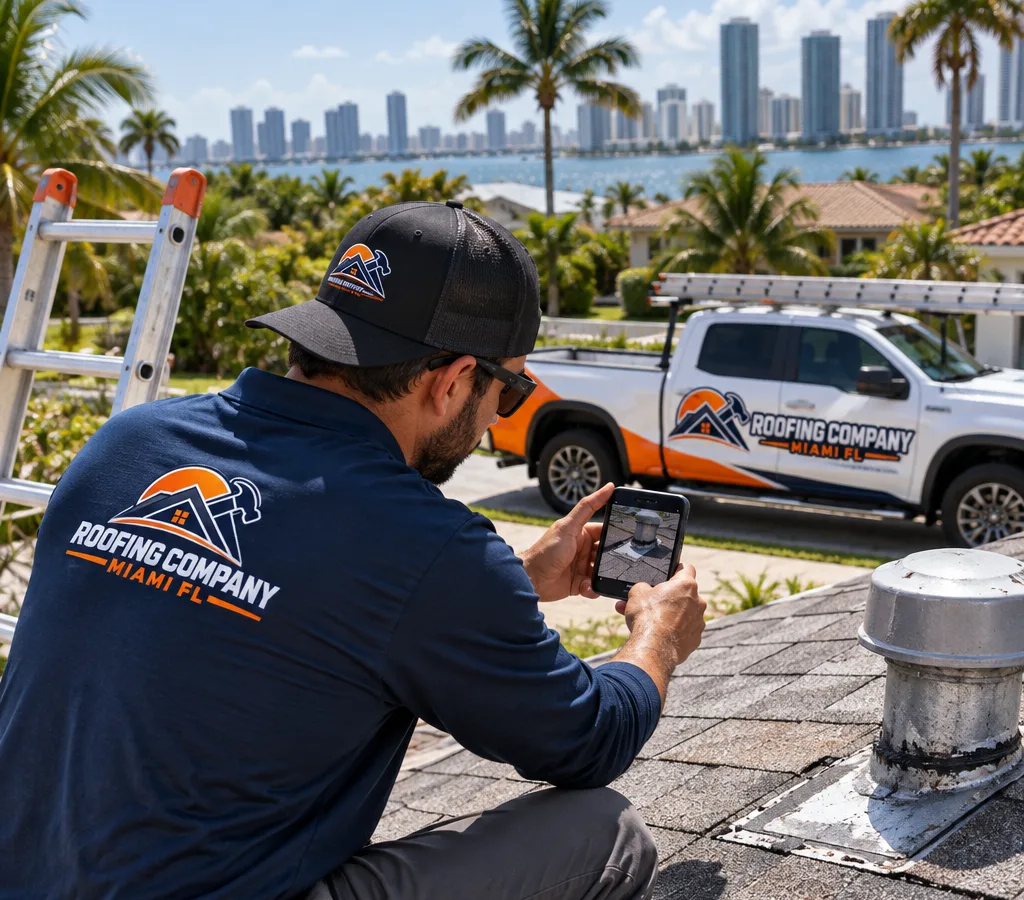
We photograph key areas and any concerns we find, so you can see the issue without guessing where it is or how serious it looks.
Serving Miami, Florida & surrounding areas
Mon–Fri 8am–6pm · Sat 9am–2pm
Roof inspection in Miami, Florida
Get a clear, photo-documented roof condition report with practical repair recommendations, so you can plan next steps with confidence.
Evidence before decisions
If you are searching for roof inspection Miami FL, you usually want one thing: a straight answer on roof condition, with evidence you can act on. Roofing Company Miami FL provides roof inspections for homeowners, property managers, and commercial owners in Miami with a written summary, photos, and a clear list of findings.
Miami roofs deal with hard sun, sudden downpours, and long periods of humidity. Those conditions speed up wear on sealants, flashing, and roof penetrations, and they can turn small defects into interior stains quickly. A good inspection focuses on where water actually gets in: transitions, edges, terminations, and anything that penetrates the roof plane.
If you are also comparing companies for ongoing work, start with a condition check first. Our crew is part of a local roofing contractor in Miami operation, so the recommendations are grounded in what is realistic to repair and what is smarter to monitor.
A useful inspection deliverable
We photograph key areas and any concerns we find, so you can see the issue without guessing where it is or how serious it looks.
You get a straightforward overview of roof condition and the items that need attention now versus items to watch over time.
We check common entry points like flashing, valleys, skylights, plumbing vents, wall transitions, and roof-to-deck tie-ins where applicable.
We spell out practical options: what can typically be repaired, what should be reworked, and what needs follow-up after heavy rain.
Single-family homes, small multifamily, retail, and light commercial roofs can all be inspected with the right access and safety setup.
If repairs are needed, we can help you prioritize by urgency, access needs, and the likely source of moisture intrusion.
Systematic roof evaluation
A roof inspection should be systematic. We start with the roof covering, then move to the details that control water.
Roof covering and surface condition: We look for cracked, lifted, missing, or deteriorated materials and any areas that suggest ponding, wind impact, or repeated patching.
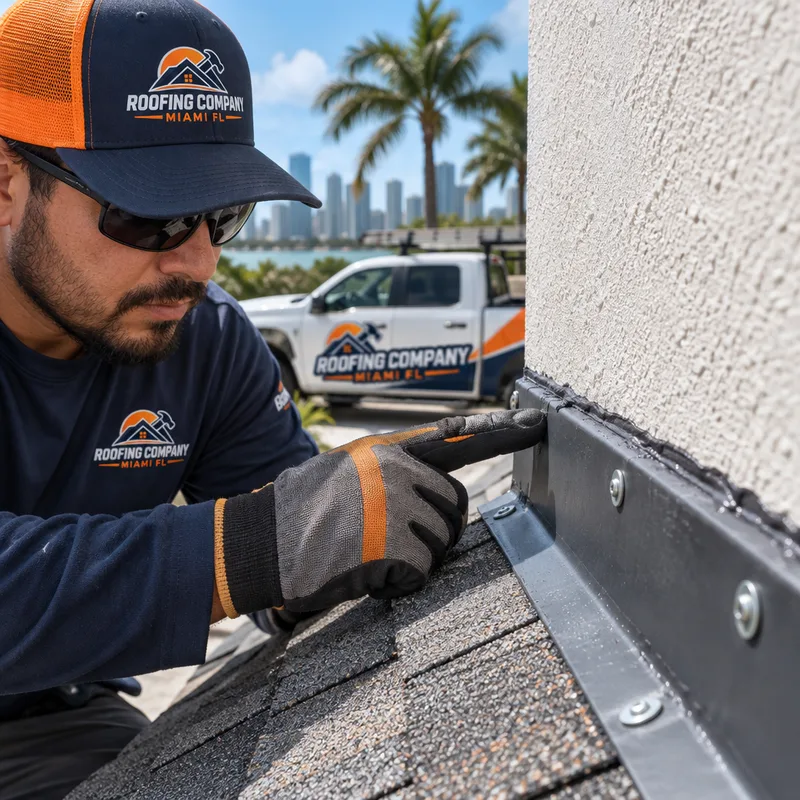
Flashing and transitions: Most leaks start where materials change direction or meet a wall. We check step flashing, counterflashing, drip edges, terminations, and sealant condition around edges and rising walls.
Penetrations and rooftop components: Plumbing vents, HVAC supports, skylights, and roof drains are frequent trouble spots. We inspect boots, collars, fasteners, and the surrounding field area for movement and openings.
Valleys, hips, ridges, and fastener lines: These areas concentrate water flow and wind stress. We check for separation, exposed fasteners, and signs of water tracking.
Interior indicators (when accessible): If you have attic access, we can look for staining, moisture marks, and daylight at penetrations. Interior clues help confirm whether a roof issue is active or old.
In neighborhoods like Coral Gables and Coconut Grove, you may see a mix of older roof assemblies and multiple remodel layers, which makes transitions and flashing details especially important. In Brickell and Downtown, roof access and safety planning can take extra coordination, so we confirm access points early.
From access planning to report
Step 1 of 4
We gather basic info on the roof type, height, and any leak history, then plan safe access. For commercial properties, this can include coordinating access times and roof entry points.
Step 2 of 4
We walk the roof where safe to do so, photograph conditions, and note areas that are vulnerable to water entry or material failure.
Step 3 of 4
We separate urgent items (active leak risk) from maintenance items (wear that should be addressed soon) and monitoring items (watch at the next inspection).
Step 4 of 4
You receive a clear summary plus photos and recommendations so you can make a decision, request pricing for repairs, or keep it on file for planning.
Planning your inspection budget
A roof inspection in Miami typically ranges from about $150 to $450 for most residential properties, while larger or more complex roofs and many commercial inspections often run $400 to $1,000+ depending on access and reporting needs. Pricing changes with roof height and pitch, the number of roof sections, whether attic/interior review is included, and how detailed the photo documentation must be. The exact cost is confirmed once we review roof access and the scope of the inspection.
CALL NOW (786) 981-8808Inspect before you invest
If you are dealing with stains, a recent storm concern, or you are planning repairs, start with evidence and a prioritized plan.
Customer perspective
“They walked me through the photos and pointed out where water was getting in around a penetration, not just the stain on the ceiling. The report made it easy to decide what to fix first.”
“The inspection was thorough and practical. I appreciated that the recommendations were prioritized and explained in plain language.”
Answers before the inspection
Most residential roof inspections take about 45 to 90 minutes on site, depending on roof size, access, and how many penetrations and transitions need to be documented. If attic access is available and you want interior indicators checked, plan for extra time.
We can often inspect after rain, but walking a wet roof is a safety issue and may limit on-roof access. In Miami, quick pop-up storms are common, so we may switch to a perimeter, ladder, and interior review approach and return for a full walk when conditions are safe.
Yes. A written summary with photo documentation is part of what makes a roof inspection useful, especially if you need to share findings with a property manager, a tenant, or a decision maker who will not be present during the inspection.
The most time-sensitive findings are usually open or deteriorated flashing, failed sealant at penetrations, damaged roof covering that can lift in wind, and poor drainage paths that hold water in the wrong places. Those issues can move from minor to interior damage quickly in heavy rain.
A good inspection can usually separate isolated repair needs from system-level deterioration by looking at the roof field condition, the number and type of failures, and whether details like flashing and terminations are consistently compromised. If the roof is near the end of its service life, the report should explain why and what options make sense next.
Yes, we inspect both residential and many commercial roofs. Flat and low-slope systems rely heavily on seams, terminations, and drainage, so the inspection focuses on membrane condition, penetrations, and water flow paths, along with any signs of recurring ponding.
Start with documented findings
Tell us what you are seeing and what type of property you have in Miami. We will schedule an inspection, document the condition with photos, and explain repair priorities so you can decide on next steps without guessing.