
Roof and deck waterproofing systems
Liquid-applied membranes, reinforced elastomeric coatings, and sheet membrane assemblies selected for slope, traffic, and drainage.
Serving Miami, Florida & surrounding areas
Mon–Fri 8am–6pm · Sat 9am–2pm
Waterproofing service in Miami, Florida
Stop leaks at the source with a clear inspection, the right membrane system, and detail work that holds up to Miami rain, salt air, and heat.
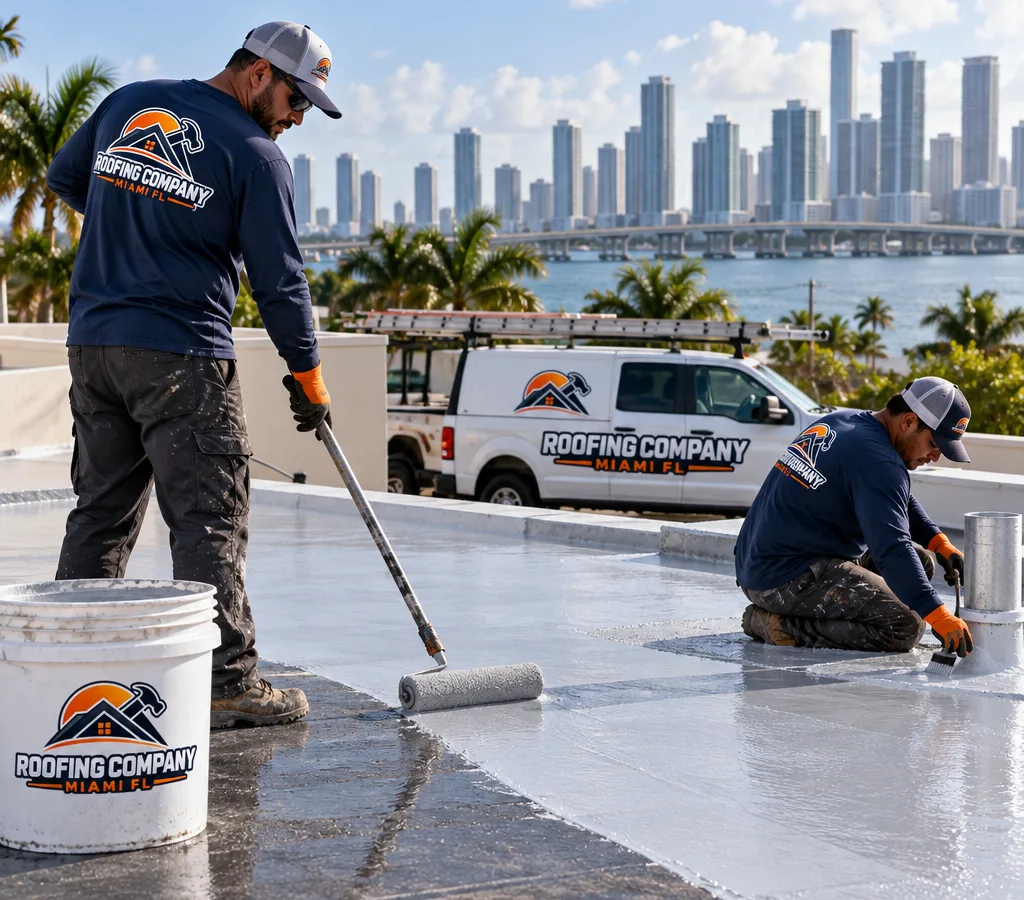
Built around the real leak path
If you are searching for waterproofing Miami help, you are probably dealing with one of two problems: water is getting in during heavy rain, or moisture is traveling through the building envelope and showing up later as stains, bubbling paint, or musty odors.
Miami's weather makes weak points show up fast. Intense downpours, high humidity, and salt air push water into small cracks and seams, then UV and heat age sealants and coatings. That is why Miami waterproofing needs to be more than a quick patch. The durable fix is a system: sound substrate, compatible primers, reinforced transitions, and properly sealed terminations.
Roofing Company Miami FL provides waterproofing services for residential and commercial properties across Miami, FL 33134 and surrounding areas. We focus on practical diagnostics, clear scopes of work, and materials that match the surface and exposure rather than a one-size approach.
If you are also comparing contractors for roof work beyond waterproofing, our team covers that broader scope as a Roofing Contractor.
Complete waterproofing scope
Liquid-applied membranes, reinforced elastomeric coatings, and sheet membrane assemblies selected for slope, traffic, and drainage.
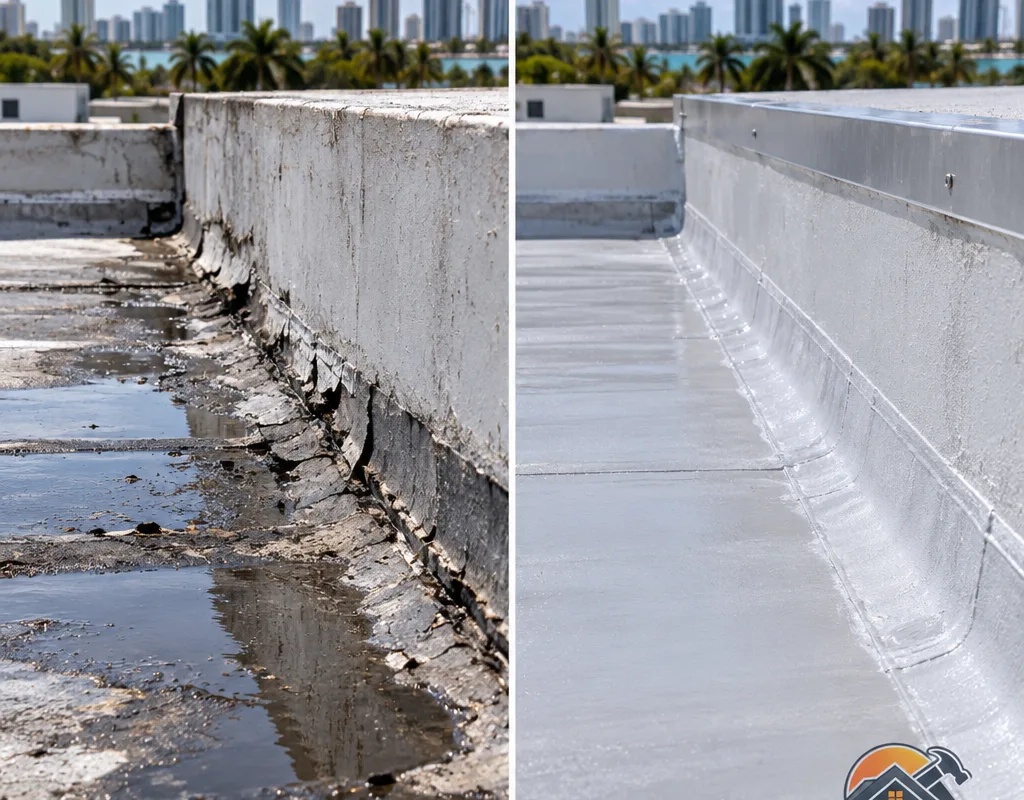
Detail work at parapet caps, scuppers, drains, skylights, vent stacks, equipment curbs, and wall transitions where leaks usually start.
Routing and sealing cracks, reinforcing joints with fabric where appropriate, and addressing movement so the repair does not split open again.
Targeted sealing of entry points and breathable water repellents where needed so walls shed bulk water without trapping vapor.
Common in multi-level properties: we trace water paths, check drains and edges, and repair the waterproofing layer without guessing.
Miami leak diagnostics
Water stains rarely point to the actual entry point. On flat and low-slope surfaces, water can travel along seams or under the membrane before it appears indoors. Around parapets and equipment, wind-driven rain can enter at a termination bar or a tiny gap in sealant that looks harmless.
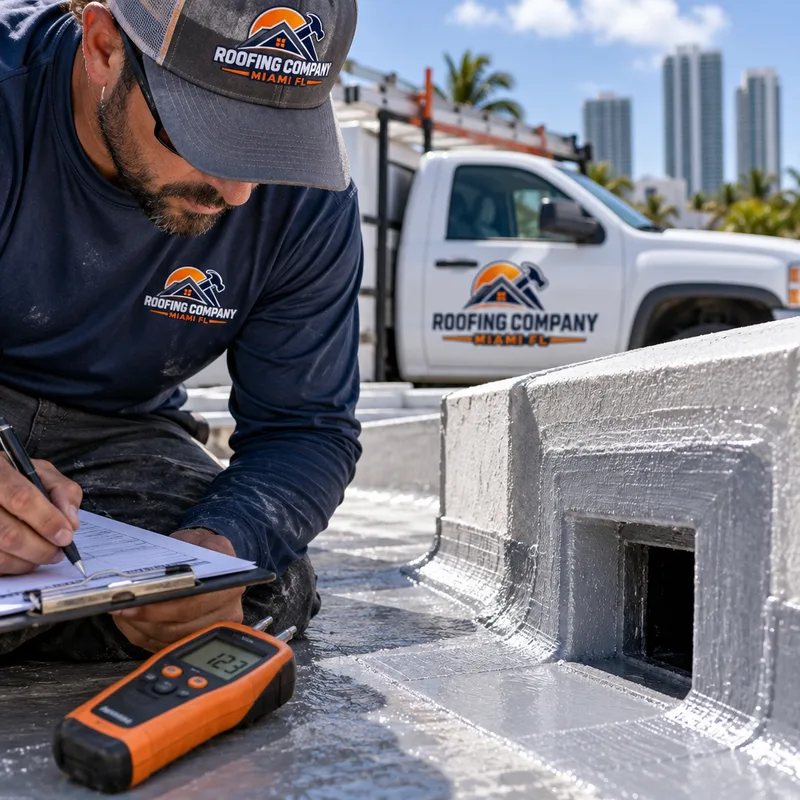
Our inspection is built around finding the path:
You get a written plan that separates immediate leak-stopping items from longer-life waterproofing upgrades. That keeps the work focused and makes it easier to compare bids on equal terms.
Local note: In areas like Brickell and Downtown Miami where many properties have rooftop mechanical equipment and parapet transitions, detail waterproofing around curbs and terminations is often the make-or-break point.
From inspection to final check
Step 1 of 5
We inspect the surface, edges, penetrations, and drainage, then identify likely entry points and any areas that need drying or removal before waterproofing.
Step 2 of 5
Cleaning, drying, and removing failed coatings or sealants. Prep may include priming, rust treatment on metal, or concrete patching so the membrane bonds correctly.
Step 3 of 5
We address seams, cracks, penetrations, and transitions with the right reinforcement and sealants. If details are wrong, the best membrane still leaks.
Step 4 of 5
We apply the selected waterproofing system at the correct thickness and coverage, with extra attention to edges, drains, and changes in plane.
Step 5 of 5
We verify terminations, confirm drainage, and walk you through upkeep like keeping scuppers clear and watching for movement at joints after storms.
Planning your waterproofing budget
Most waterproofing projects in Miami typically range from about $800 to $6,000+, depending on the surface type and how much prep is required. Small, targeted leak repairs around penetrations or seams often fall on the lower end, while full roof or deck membrane systems, larger areas, or tear-off and substrate repair land higher.
Your final price changes with square footage, access, material choice such as coating versus sheet membrane, number of details including drains, parapets, and curbs, and whether moisture-damaged sections must be removed and rebuilt. We confirm the exact scope and cost after an on-site inspection.
Details that prevent repeat leaks
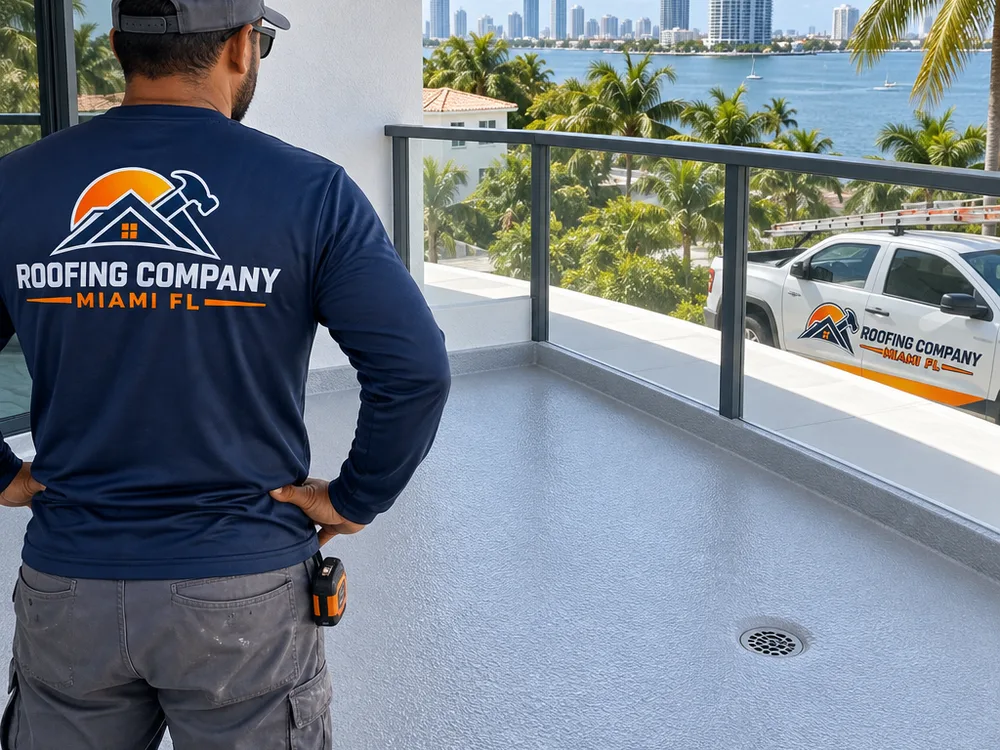
Customer proof
“We had an intermittent leak that two patch jobs never solved. The inspection photos made it clear the water was coming in at the wall transition, not where the stain showed. After the waterproofing work, we went through multiple heavy rains with no new staining.”
“They were straightforward about what needed immediate repair and what could wait. The crew focused on the drains and penetrations first, then coated the full area. The finish looks clean and the runoff is better than before.”
Answers before waterproofing
In many cases we can schedule an inspection quickly and start priority leak-control repairs soon after, depending on weather and access. Active leaks often need the source identified first, because surface patches applied to the wrong spot fail during the next heavy rain. We will explain what can be done immediately and what should be handled once the surface is fully dry for proper adhesion.
Liquid-applied membranes and sheet membranes are both common for low-slope roofs and decks, and the right choice depends on substrate condition, drainage, UV exposure, and foot traffic. For example, a traffic-rated deck coating may be appropriate where people walk regularly, while other areas do better with a reinforced membrane focused on seams and terminations. We match the system to the surface and the failure points found during inspection.
Yes, coastal exposure usually means more salt air and stronger wind-driven rain, which can shorten the life of cheap sealants and stress edge details. The practical difference is more attention to metal edges, fasteners, terminations, and compatible coatings that resist UV and weathering. We also look closely at parapets and roof-to-wall transitions where wind pushes water sideways.
Sometimes, but only if the existing layer is sound, clean, and compatible with the new product. If the current coating is chalking, peeling, or has trapped moisture underneath, covering it can lock in problems and cause early failure. We determine this during inspection and recommend either a prep-and-recoat approach or removal where the substrate is compromised.
The fastest way is a targeted inspection that traces likely water paths, because interior stains can be misleading. Roof leaks often correlate with penetrations, drains, and seams, while wall intrusion may show around window heads, cracks, or vertical joints. In Miami, wind-driven rain can push water into small openings and make the source appear far from the stain line. We document the findings so you can see the reasoning behind the scope.
Protect interior finishes, move valuables away from the affected area, and take photos of the leak location and any visible exterior conditions you can safely observe. Avoid climbing onto a wet roof or balcony surface. Once we inspect, we can prioritize stopping the entry point and then plan the longer-life waterproofing work that prevents repeat damage.
Start with a documented inspection
Tell us what you are seeing and where it shows up. Roofing Company Miami FL will inspect, document the leak path, and provide a written scope for waterproofing in Miami that fits your surface, budget, and timeline.