
True temporary weather protection
We tarp to shed water, not just to cover a hole. Placement and fastening are chosen to handle Miami wind and sudden downpours.
Serving Miami, Florida & surrounding areas
Mon–Fri 8am–6pm · Sat 9am–2pm
Roof tarping in Miami, Florida
Fast, secure temporary roof cover after storm damage or sudden leaks, with on-site inspection and a clear plan for next steps.
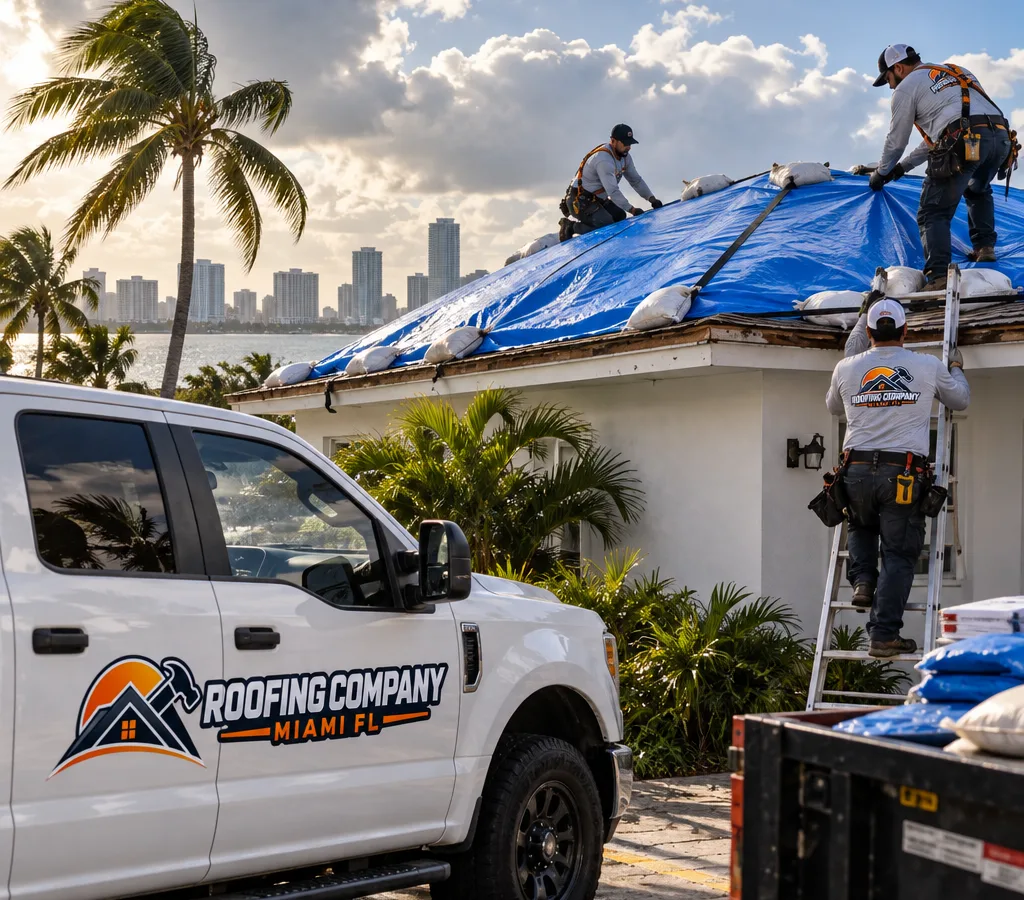
Stabilize the roof first
When a roof starts leaking, the goal is simple: stop water intrusion before it spreads into insulation, drywall, cabinets, or electrical. Our roof tarping Miami service is built for urgent situations, especially after heavy rain and wind events that can peel shingles, lift tiles, or expose underlayment.
A tarp is a temporary cover, but it has to be installed correctly to work. That means using the right tarp size and weight, laying it high enough up-slope to shed water, securing it so wind cannot turn it into a sail, and protecting the roof surface underneath. We arrive, inspect the damage and access points, install the temporary cover, and document what we see so you can move straight into repairs.
If you are looking for a roofing contractor in Miami to handle both emergency protection and the follow-up scope, Roofing Company Miami FL can help you stabilize the roof first and then schedule permanent work once the structure is dry and safe to repair.
Temporary protection, clear next steps
We tarp to shed water, not just to cover a hole. Placement and fastening are chosen to handle Miami wind and sudden downpours.
When safe, we check the roof surface and likely water path so the tarp covers the source, not just the ceiling stain.
Clear photos of torn materials, exposed decking, or displaced tiles help with decision-making and are useful if you are filing a claim.
Quick covering can limit secondary damage so you are not forced into bigger tear-outs than necessary.
After tarping, you get a practical path forward: what should be repaired first, what can wait, and what needs further inspection once dry.
Secure placement matters
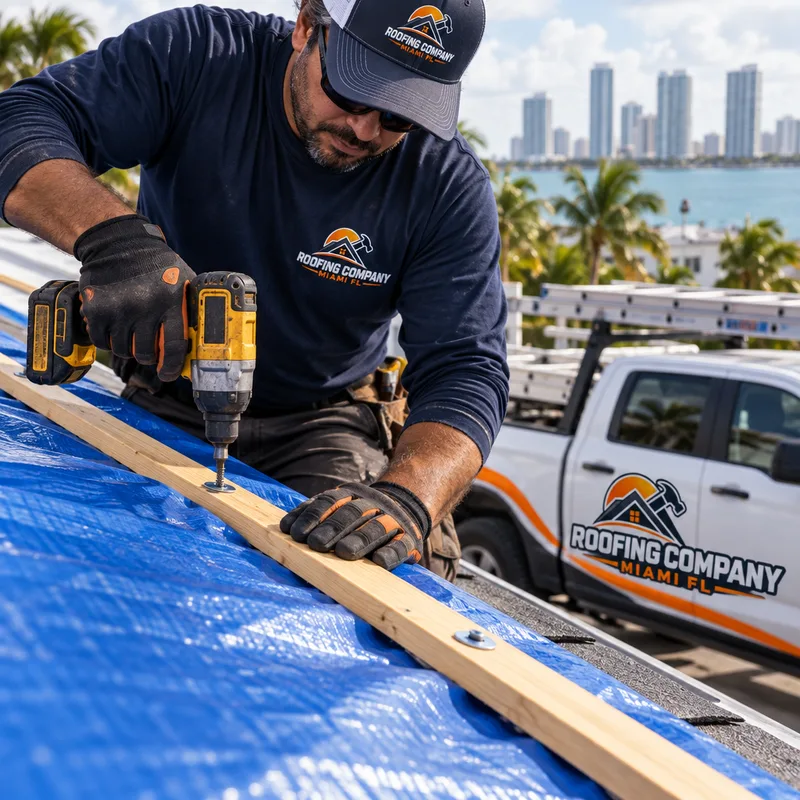
A tarp works when water is guided over the damaged area and off the roof, while the edges stay sealed and anchored. The most common failures we see are tarps placed too low on the slope, corners left loose, or fasteners that tear out during a gust.
For most emergency situations we:
Miami's weather adds two practical constraints: sudden rain can start before a roof is fully dry, and coastal gusts can punish weak anchoring. If the roof deck is compromised, we focus on making the cover secure without creating new damage. If access is unsafe, we will talk through safer alternatives and timing.
Temporary tarping is not a substitute for repair. It buys time. The sooner the permanent roof work is completed, the less likely you are to deal with hidden moisture in insulation or wood framing.
From urgent call to repair plan
Step 1 of 5
We ask what happened (storm, fallen limb, active leak), roof type, and whether you see interior water. We also confirm access and any immediate hazards like downed lines.
Step 2 of 5
We locate the likely entry point, check the surrounding field for lifted materials, and identify what the tarp needs to cover to shed water properly.
Step 3 of 5
We place and fasten the tarp for wind resistance and drainage, with enough coverage to handle shifting water paths during heavy rain.
Step 4 of 5
You get photos and a plain-language summary of what was covered, what looks damaged, and what to watch for inside after the next rain.
Step 5 of 5
Once the roof is stabilized, we outline the permanent repair approach and set expectations for materials, lead times, and the order of work.
Planning emergency coverage
Roof tarping in Miami typically ranges from about $350 to $1,200 for straightforward emergency coverage, while larger or steeper roofs, multi-area damage, or difficult access can run $1,200 to $2,500+. Price depends on tarp size and grade, roof height and pitch, how far the tarp must extend to reach sound material, and whether debris removal or temporary fastening lumber is needed. The exact cost is confirmed after an on-site inspection of the damaged area and safe access points.
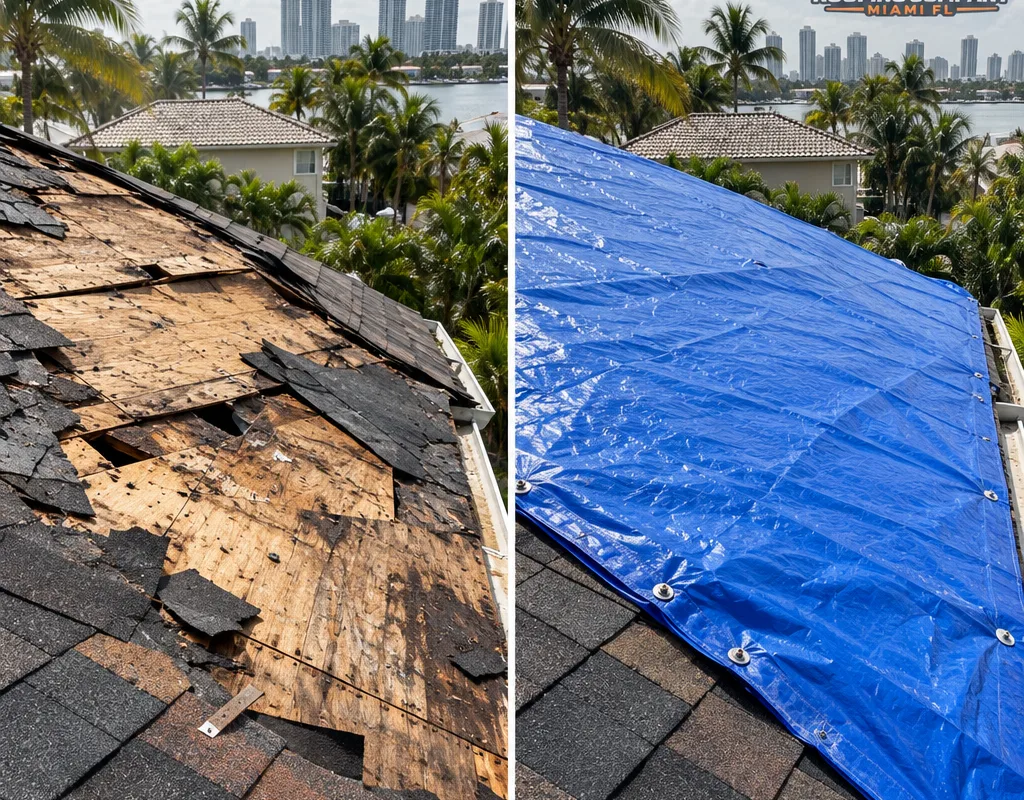
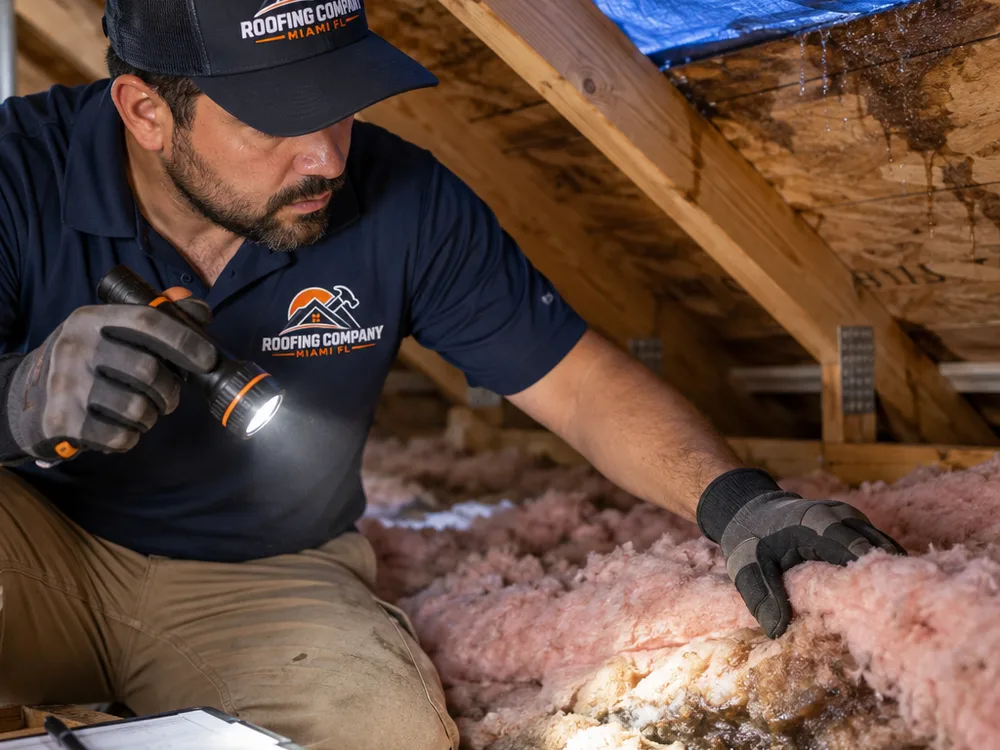
CALL NOW (786) 981-8808Temporary protection in the field
Answers before we cover the roof
In many cases we can schedule emergency roof tarping quickly, but timing depends on active weather, roof safety, and the volume of storm calls. If winds are still high or lightning is present, installing a tarp can be unsafe, so we coordinate the earliest safe window and may recommend interior steps to limit damage until the roof can be accessed.
A properly installed tarp can last weeks, but it is still a temporary measure and should be treated as a short-term bridge to repair. Sun, wind, and pooling water can degrade tarps faster in South Florida conditions, so we recommend moving to permanent repairs as soon as practical and rechecking after major rain or gusty weather.
A correctly placed tarp usually stops or dramatically reduces leakage by shedding water away from the damaged area, but results depend on how water is entering. Some leaks travel along underlayment, valleys, flashing, or nail lines, so the tarp must extend beyond the visible damage to cover the real entry path.
Yes, tarping can be used on many roof types, but the method changes. Tile roofs often need careful access to avoid breaking sound tiles, and low-slope roofs may require a different temporary approach to prevent water from migrating under the cover, especially around penetrations and transitions.
We do not recommend DIY roof tarping during or after storms because falls and electrical hazards are common, and incorrect fastening can create more damage. Even in calm weather, wet surfaces and hidden deck weaknesses make roof access risky, and a poorly secured tarp can tear loose in wind.
We can provide photos and a written description of the observed roof conditions at the time of service, including the areas covered and visible storm-related damage. Your carrier determines coverage, but clear documentation from the first visit helps support a consistent scope when you move from temporary protection to permanent repair.
Move valuables away from the leak area, place containers to catch dripping water, and use towels to protect flooring. If you see ceiling bulging or water near light fixtures, avoid that area and shut off power to affected circuits if you can do so safely, then request emergency service so the roof can be stabilized.
Protect the roof before damage spreads
Tell us what happened and where you see leaking or damage. We will confirm safe access, tarp the roof to limit water intrusion, and lay out the next steps for permanent repair.